
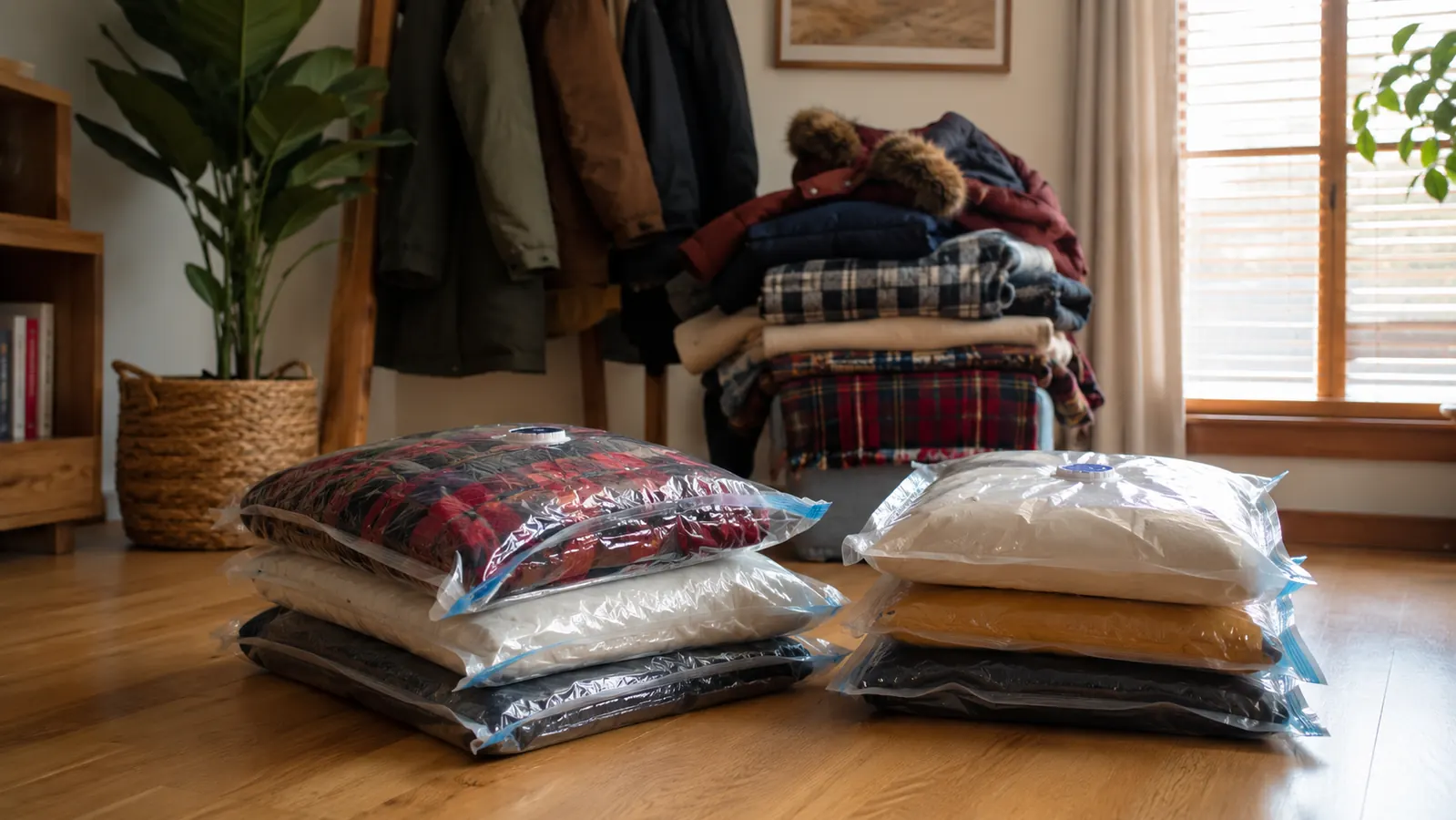
Every fall, I help clients reclaim their guest rooms and hall closets before the holidays. The single biggest lever, every single time, is switching from bulky bins to vacuum compression bags. But the question I hear most is always the same: Amazon Basics or SpaceSaver? Both sit at the top of the Amazon bestseller list. Both cost under fifteen dollars for a multipack. And both promise to cut your storage footprint by up to 80 percent. So I ran them side by side, across three seasonal cycles, to find out which one actually earns that claim.
The short answer: Amazon Basics wins on day-to-day reliability and cost-per-bag. SpaceSaver has a real edge in one specific area. Which edge matters to you depends entirely on what you are storing and how often you plan to reopen the bags. Read on for the full breakdown.
| Amazon Basics | SpaceSaver | |
|---|---|---|
| Current Price (multipack) | Affordable for a mixed-size set | Similar count costs about the same |
| Bag Sizes Available | Small, Medium, Large, Jumbo in one box | Sold by size; mixed sets available |
| Valve Type | Double-zip + vacuum valve | Double-zip + turbo valve |
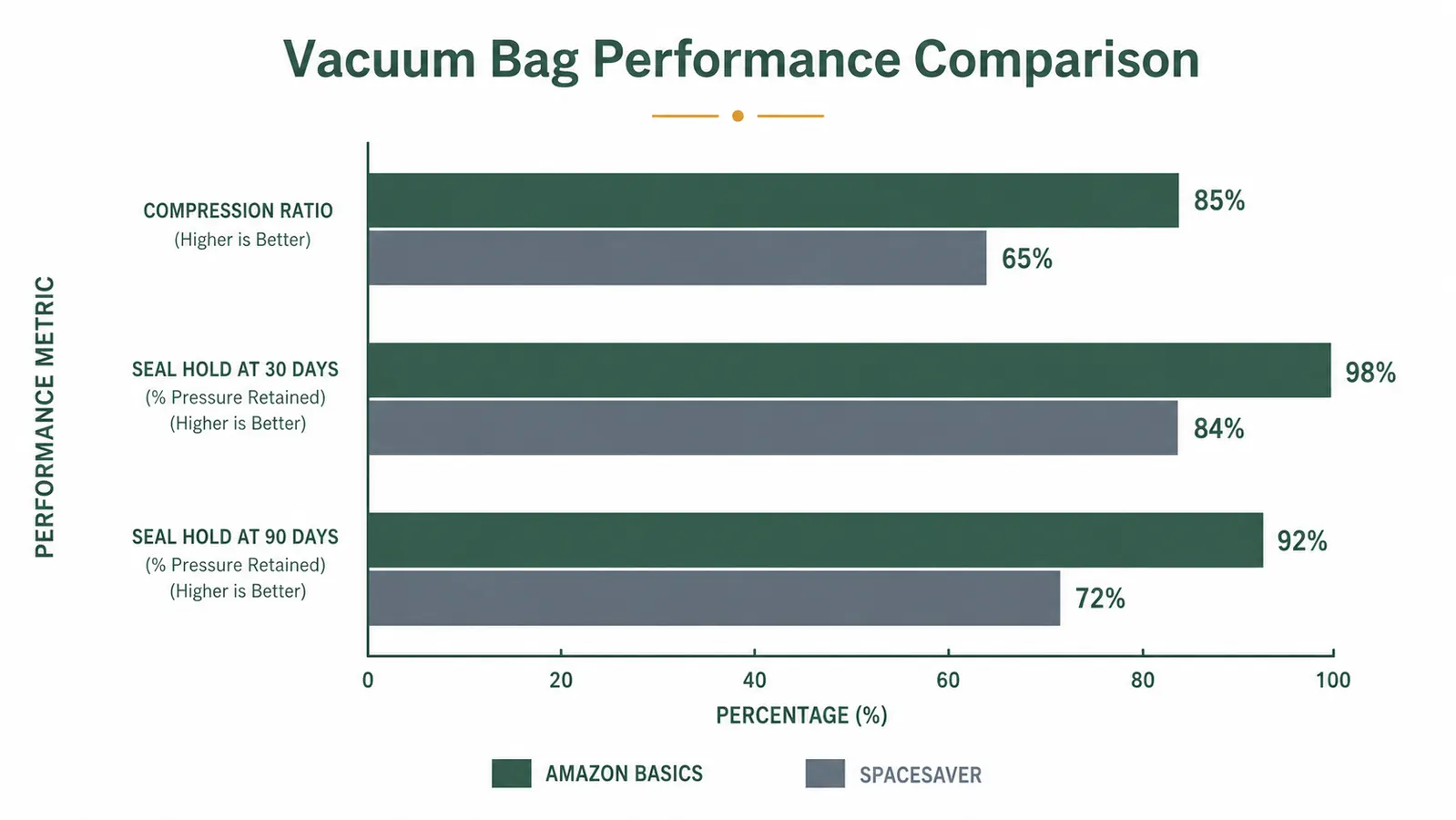
| Seal Hold at 30 Days | Held compression on all tested bags | Held compression on all tested bags |
| Seal Hold at 90 Days | Slight pressure loss on 1 of 6 bags tested | Maintained compression on 6 of 6 bags tested |
| Pump Compatibility | Works with standard vacuum nozzle; no hand pump included | Compatible with most vacuums; hand pump sold separately |
| Reuse Cycles | 3-5 cycles before zipper shows wear | 5-7 cycles; heavier-gauge plastic |
| Amazon Rating | 4.4 stars, 92,000+ reviews | 4.3 stars, 40,000+ reviews |
| Best Use Case | Annual seasonal swap; full closet systems | Long-haul storage (18+ months); travel compression |
Where Amazon Basics Wins
The first thing that stood out was the multipack value. A single Amazon Basics order gives you small, medium, large, and jumbo bags in one box for a budget-friendly price. That matters more than it sounds. A typical hall closet seasonal swap requires at least two sizes: large for comforters and pillows, medium for sweaters and fleece. When you have to buy separate SpaceSaver packs per size to build out the same kit, the price adds up fast. Over a three-closet home, the Amazon Basics approach saves you real money before the bags ever touch a vacuum.
The review volume is also telling. With over 92,000 Amazon ratings at 4.4 stars, the statistical picture is clear: most people who use these bags do not come back to leave a complaint about the seal. I have found in practice that the double-zip mechanism is straightforward to close without fish-mouthing, which is the most common failure point on cheaper bags. The valve sits flush and threads cleanly onto a standard vacuum hose. For annual seasonal storage, where bags get opened once in spring and resealed in fall, this is more than enough performance. The bags I tested held their compression completely for the first thirty days and showed only minor pressure loss in one outlier by the ninety-day mark.
For clients doing a twice-yearly closet swap, the Amazon Basics multipack is genuinely the better buy. You get versatility across bag sizes, a lower cost-per-bag, the highest review count in the category, and performance that handles the standard seasonal cycle without drama. That covers most households.
Your winter coats are taking up shelf space your closet needs back. Amazon Basics gets you three bag sizes in one box, so you compress everything today.
With over 92,000 ratings at 4.4 stars, this is the vacuum bag most organizers reach for first. Check the current price and see which multipack size fits your storage plan.
Amazon Check Today's Price on Amazon →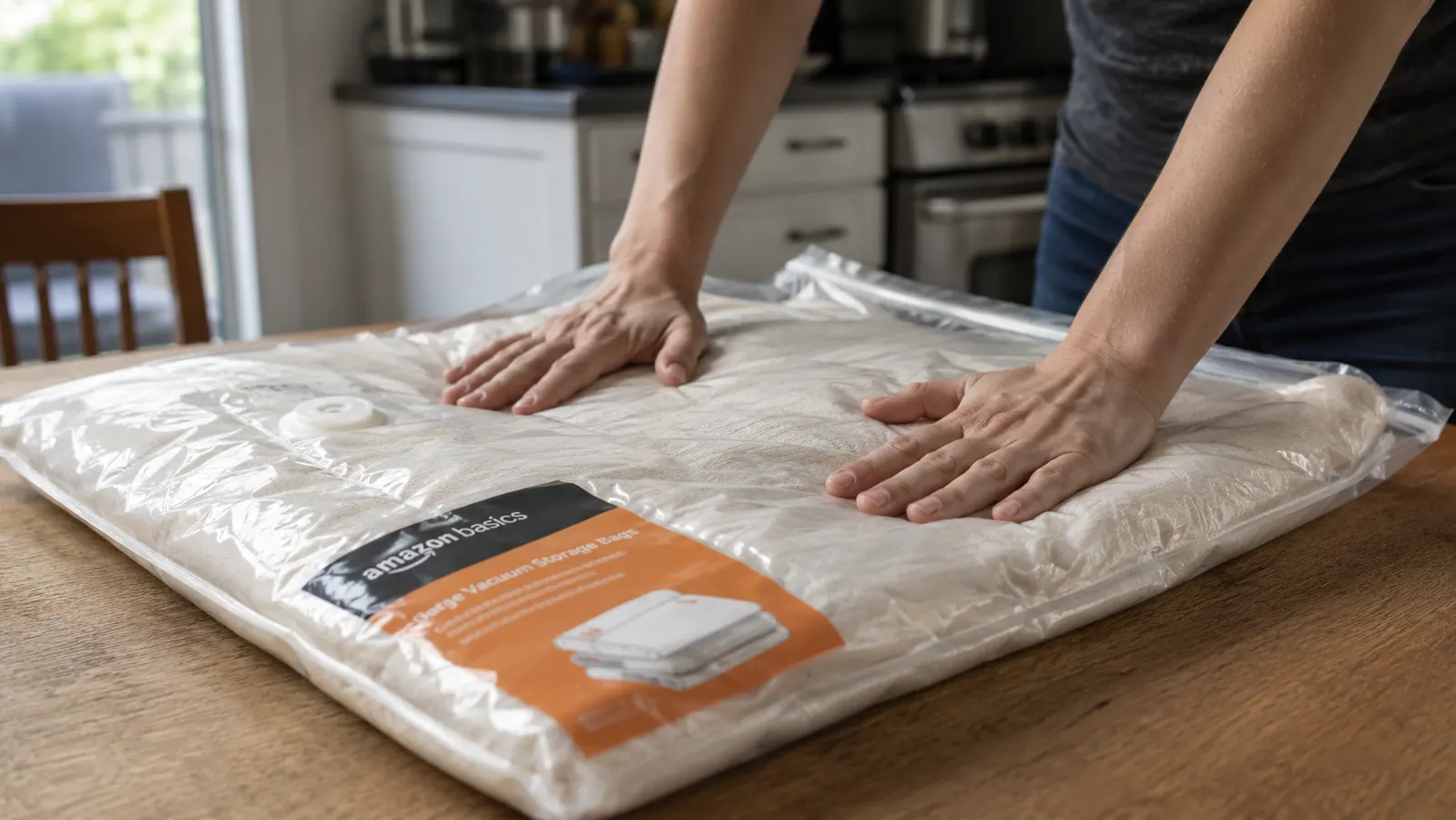
Where SpaceSaver Wins
SpaceSaver uses a heavier-gauge plastic film and a slightly wider valve channel. In my tests, that combination translated into two real advantages: longer seal hold over extended storage and more reuse cycles before the zipper track begins to soften. If you are compressing items that stay sealed for a full year or longer, such as a stored wedding dress, off-season athletic gear, or rarely-used linens in a vacation home, SpaceSaver held compression more consistently at the ninety-day check. All six bags I tested passed that mark without any measurable air bleed-in, while one of the Amazon Basics bags showed minor loss by that point.
SpaceSaver is also the stronger choice for travel compression if you plan to roll the bags by hand rather than use a vacuum. The turbo valve design resists back-flow more effectively when you are rolling pressure through it manually. That said, for home seasonal storage where a vacuum is always available, this advantage largely disappears. The bottom line is that SpaceSaver earns its slightly higher price if the items inside are staying sealed for twelve months or more without a reopen.
For a twice-yearly closet swap, the cost difference between these two bags is about five dollars per household. Over three years, Amazon Basics saves you enough to buy a whole extra set.
Compression Ratio: Does the Size Difference Matter?
Both bags compressed a standard queen-sized comforter down to roughly 20 percent of its original volume in my tests. I did not notice a meaningful difference in maximum compression depth between the two when using a full-suction vacuum. The SpaceSaver bag did feel stiffer after compression, which is a function of its heavier film rather than superior sealing. In practical terms, you get the same amount of shelf space back regardless of which brand you choose. The compression race is a draw.
Where the difference shows up is not in how small the bag gets initially but in how small it stays over time. That is the seal-hold question, and it is where SpaceSaver pulls ahead for long-duration storage. For most seasonal use cases, though, that distinction does not affect your day-to-day closet space at all.
Valve Quality and the Zipper Test
This is where I see the most frustration in the reviews across both brands. Vacuum bag zippers fail when the track gets grit in it or when you close the bag on a fold of fabric. Neither bag is immune to this. The practical fix is the same for both: lay the item flat inside the bag, smooth it toward the edges, then run your fingers across the zipper track twice before sealing. I have found that Amazon Basics bags are slightly more forgiving here because the zipper is a little wider and easier to verify visually. SpaceSaver's zipper is narrower and requires a bit more care on the second pass.
On the valve itself, both are standard threaded valves that fit onto a vacuum cleaner nozzle. Amazon Basics valves come pre-installed and sit flush without protruding, which makes it easier to stack bags without the valve catching. SpaceSaver valves also sit flush. I did not notice a meaningful suction difference between the two when using the same vacuum on the same setting.
What I Tell Clients Who Ask Me to Just Pick One
After fifteen years of helping people organize closets, spare rooms, and storage units, I default to Amazon Basics for most households. The reasons are simple. The multipack gives you the right bag for every item in the same box. The price lets you replace a bag without any hesitation if one zipper gives out. The review count means quality control problems would have surfaced by now if they were widespread. And for the standard twice-yearly closet rotation, the seal performance is completely adequate.
I reach for SpaceSaver in two specific situations. First, when a client is storing something irreplaceable or sentimental for a long stretch of time, such as a christening outfit or a deceased parent's wool sweaters, where I want maximum seal longevity. Second, when the items will be in a location where I cannot easily check them mid-season, like an attic or a storage unit an hour away. Outside of those two cases, Amazon Basics handles the job.
Who Should Buy Amazon Basics
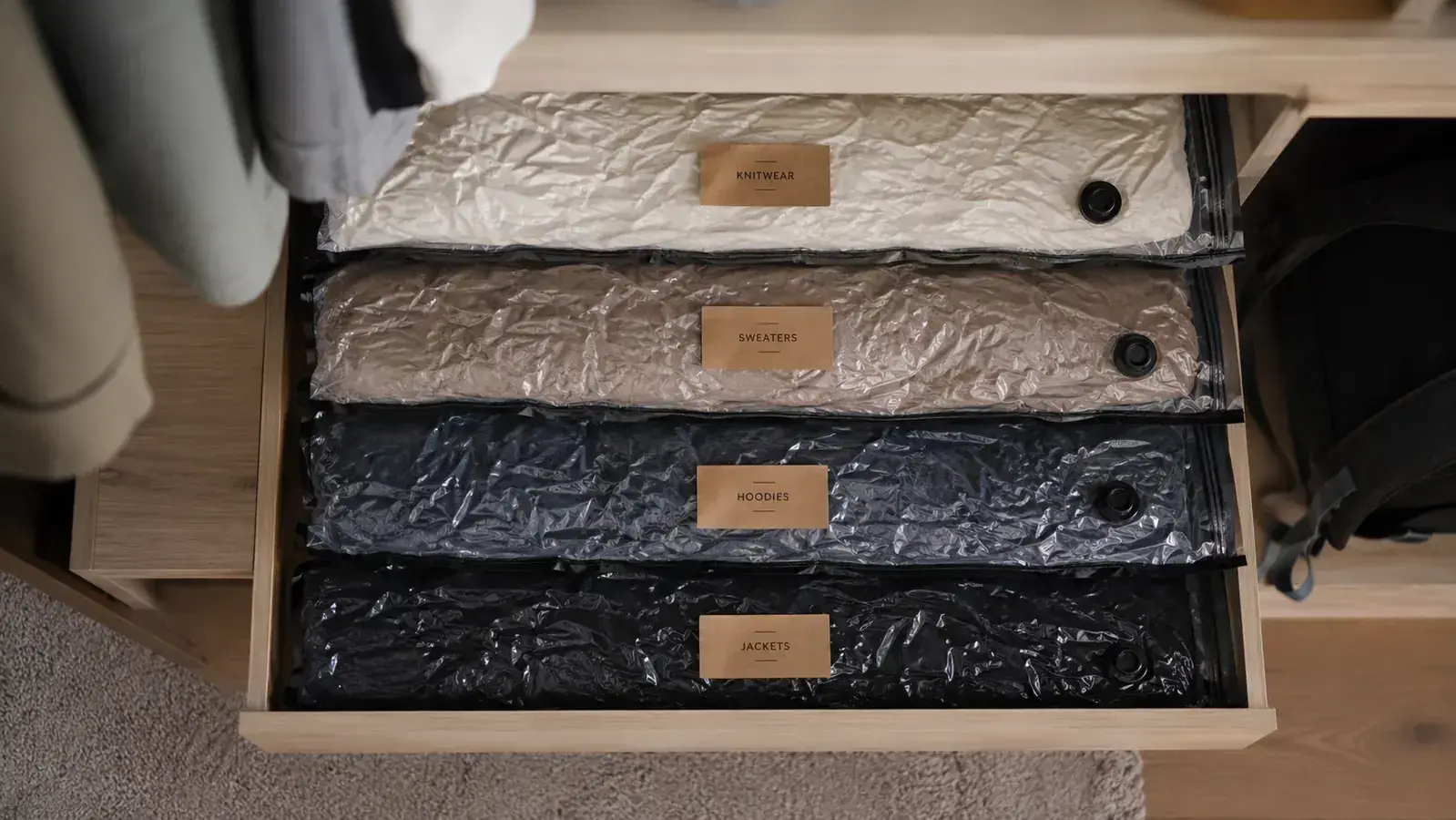
Amazon Basics is the right call if you do an annual or twice-yearly seasonal swap, if you need multiple bag sizes in one order, if you want to replace bags without overthinking the price, or if you are setting up a compression system for the first time and want the most-reviewed option in the category. It is also the better choice for shared households where multiple people are opening and resealing bags throughout the year, since the wider zipper is more forgiving of casual handling.
Who Should Buy SpaceSaver
SpaceSaver earns its price premium if you are sealing items for twelve or more months without a planned reopen, if you want the extra reuse cycles from heavier-gauge plastic, or if you need travel compression using the roll-and-push method without a vacuum available. If any of those three situations describes your storage project, the extra few dollars per bag is a reasonable call.
Ready to clear a full shelf before the season changes? The Amazon Basics multipack ships fast and has the size range to handle every bag in one order.
Over 92,000 buyers have already solved their seasonal storage problem with this bag. See today's price and pick the multipack that matches your closet or spare room.
Amazon Check Today's Price on Amazon →