
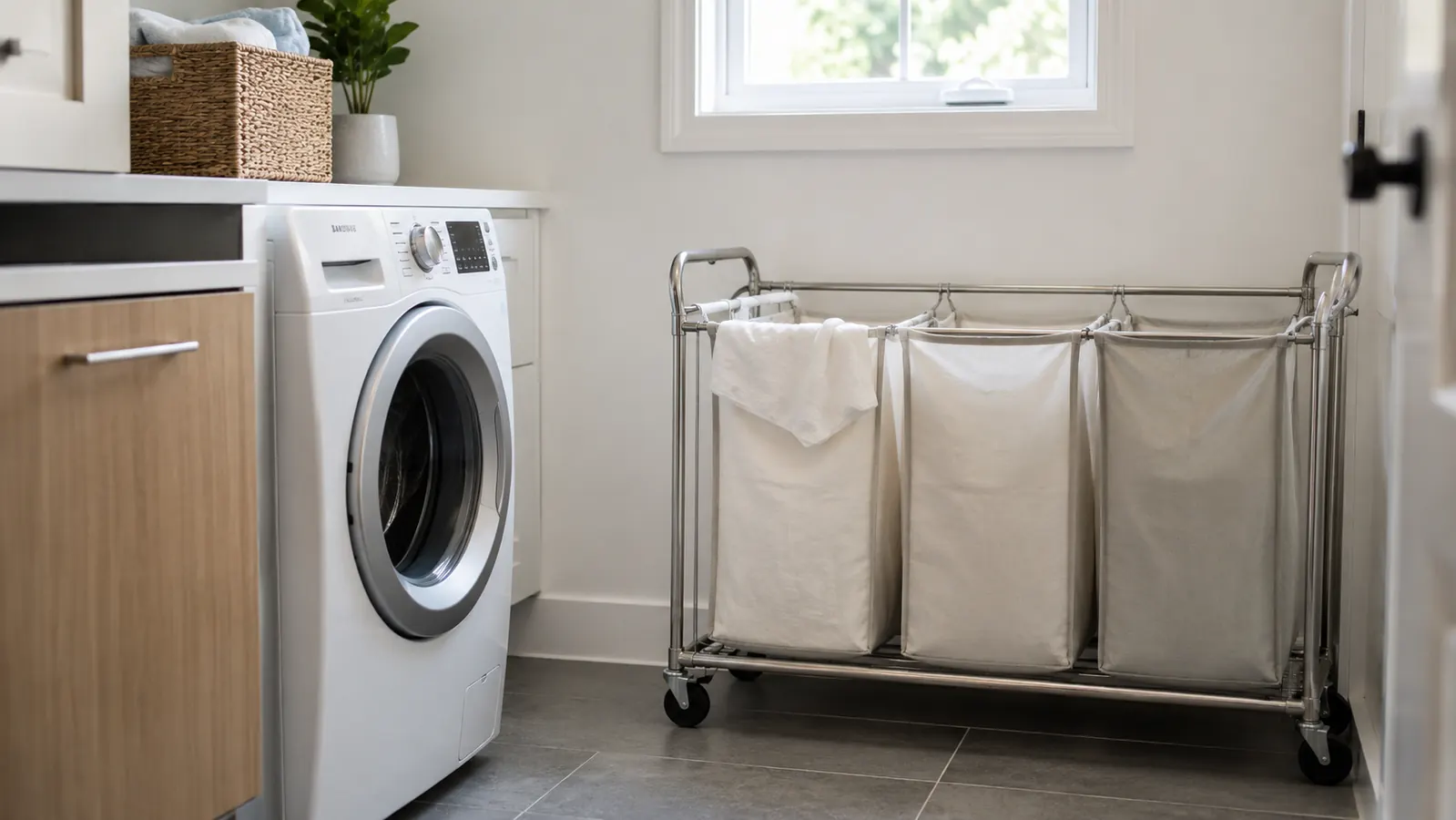
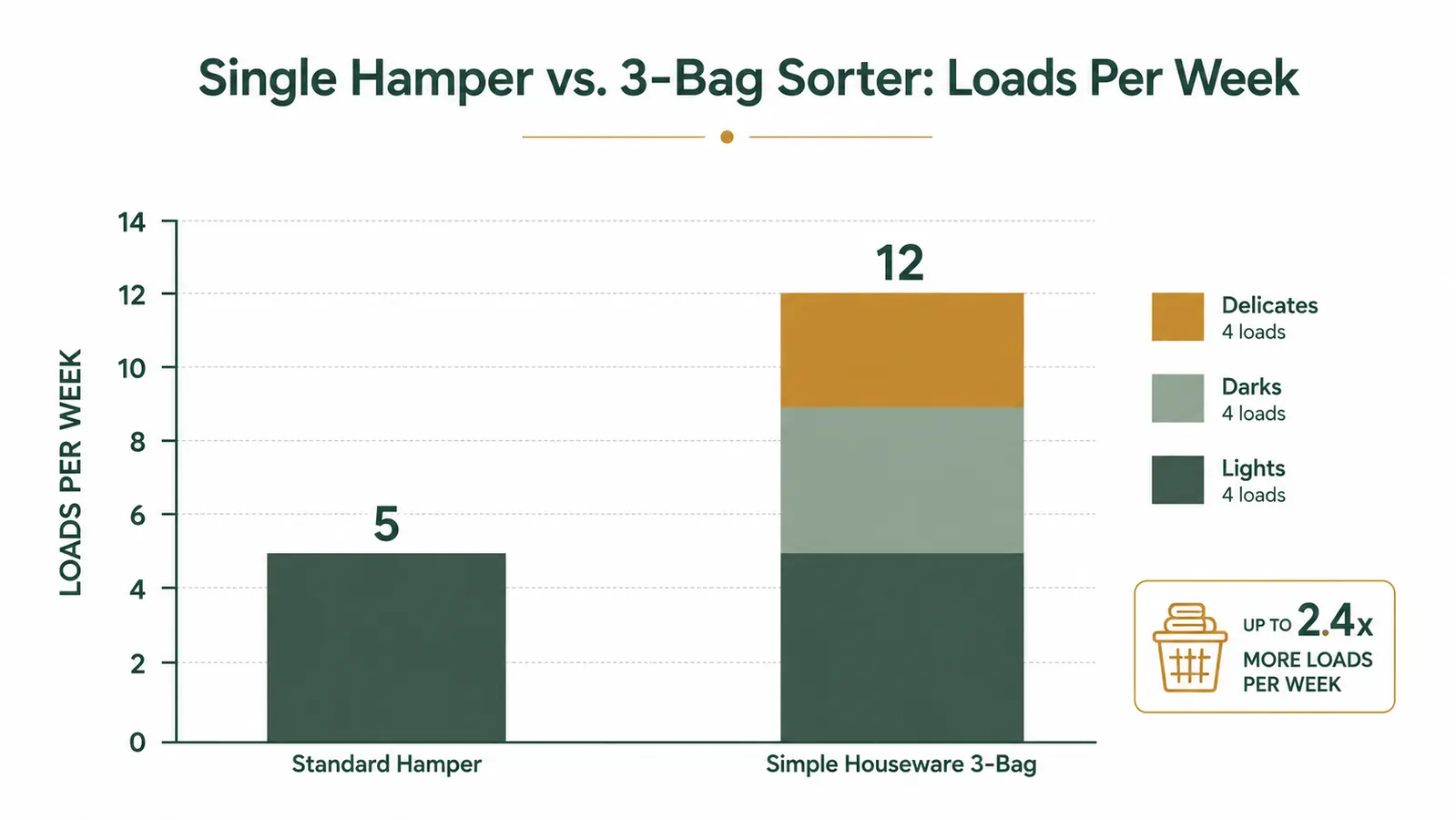
I bought the Simple Houseware 3-Bag Rolling Laundry Sorter in January 2025, right after spending a Saturday tripping over four mismatched laundry baskets scattered across two floors of my house. My husband Mark, our two teenagers, and I generate roughly nine or ten loads a week. The baskets were fine when the kids were small. At some point they stopped being fine and I just kept tolerating them. That Saturday was the last straw. I ordered this cart that evening and it arrived two days later. That was eighteen months ago, and it is still in our main-floor laundry room right now.
The Simple Houseware sorter has more than 25,000 reviews on Amazon and a 4.6-star rating, which is the kind of number that either means a product is genuinely good or that people are returning them so fast they never bother to leave a review. After a year and a half, I can tell you it belongs in the first category, with a few real caveats worth knowing before you buy.
The Quick Verdict
A genuinely sturdy, affordable rolling sorter that earns its place in a busy laundry room, though the bags will eventually need replacing and the frame is less forgiving of overloading than the description suggests.
Amazon Check Today's Price →Still hauling separate hampers from every room? This one cart ends the basket hunt.
The Simple Houseware 3-Bag Rolling Sorter is currently the most practical laundry upgrade I have found at this price. Roll it where you need it, sort as you go, and wheel the whole thing straight to the washer.
Amazon Check Today's Price on Amazon →How I Have Used It Over 18 Months
Our laundry room is small, roughly seven feet wide, with a side-by-side washer and dryer taking up one full wall. The sorter lives in the remaining floor space between the dryer and the door. When it is full, which happens about every three days with four people, I roll it two feet to the left and load directly from the bags into the washer. That mobility matters more than I thought it would. Even a short roll saves the awkward lift-and-carry that tends to scatter clothes on the floor.
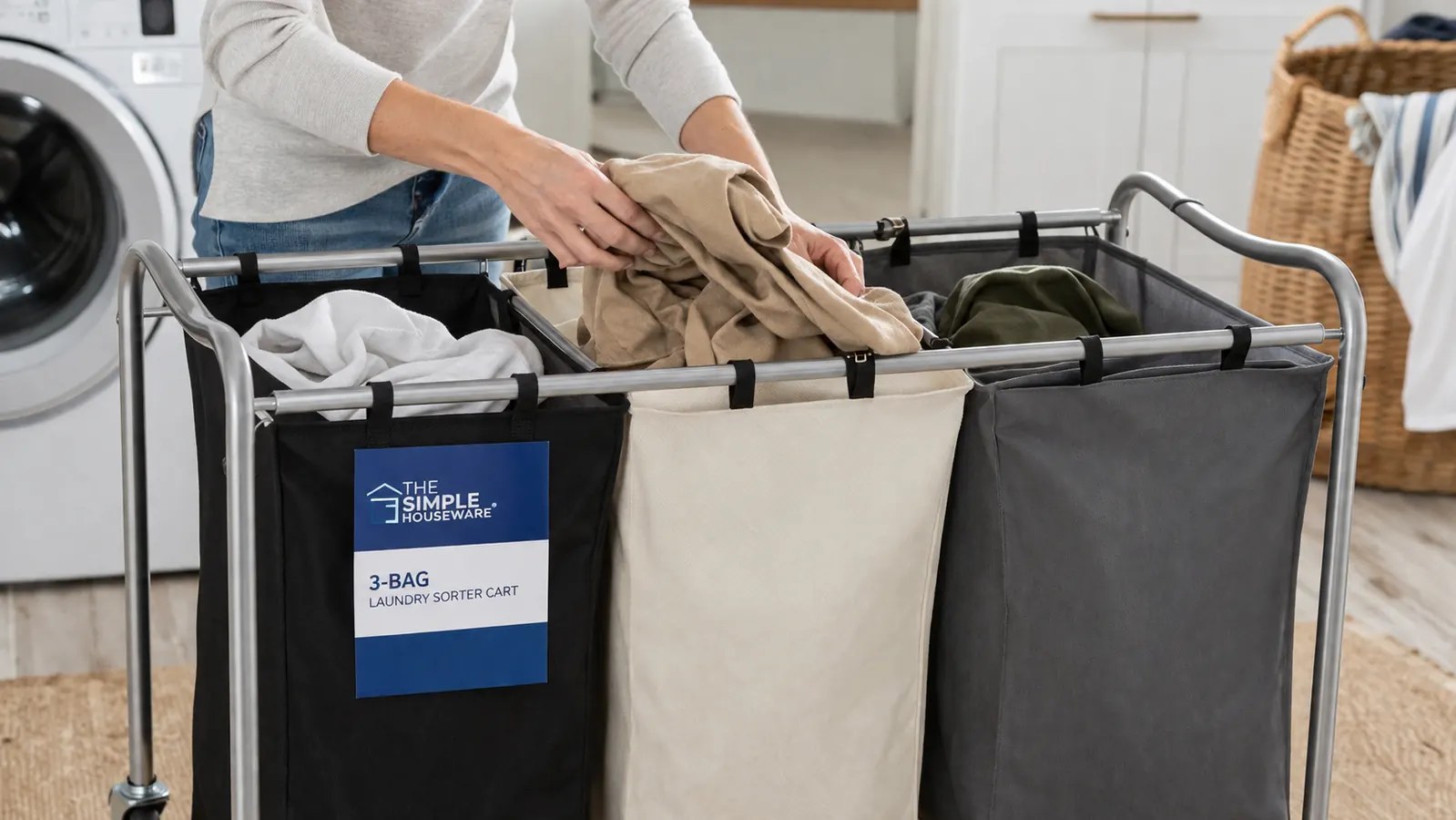
We label the three bags with simple handwritten tags: lights, darks, and delicates. My 15-year-old daughter uses it correctly probably 70 percent of the time, which is a significant improvement over throwing everything on the bathroom floor. My 13-year-old son gets the lights and darks right but treats delicates as a general overflow bag. That is a parenting problem, not a product problem. The point is that three visible, labeled sections changes behavior in a way that a single lidded hamper never did.
Over eighteen months I have washed these bags at least eight to ten times each. The mesh inserts handle it without shrinking or fraying, though the stitching on the drawstring loops of one bag started to look thin around month fourteen. I reinforced it with a quick hand stitch. The frame itself shows no rust despite sitting in a room that sees steam and humidity every day.
Frame and Build Quality: What the Steel Tube Construction Actually Means
The frame is powder-coated steel tubing, and the coating has held up without chipping or peeling anywhere visible. The joints where the crossbars meet the uprights feel solid, not loose, after a year and a half of daily use. I want to be careful here, though. The listed weight capacity is around 40 to 45 pounds across all three bags, and that number is real. I pushed past it twice in the first month, stuffing all three bags completely full before wash day, and the frame developed a slight forward lean. It corrected when I emptied it, but the fit at one joint felt marginally looser than before.
The lesson I learned early is to roll it to the washer before all three bags reach capacity, not after. That one habit change solved the stability issue entirely. At three-quarters full the cart is rock steady. Completely overstuffed, it wobbles. Most carts at this price point behave the same way, but I wanted to be direct about it because a few reviewers describe theirs as flimsy, and I think what they experienced was consistent overloading rather than a design flaw.
Roll it to the washer at three-quarters full, not when every bag is packed to the top. That one change made this cart feel like a different product.
The Bags: Fabric, Mesh, and the One Thing That Will Eventually Wear Out
The bags are the part of this cart you will replace before you replace the frame. Mine are original after eighteen months, but the oldest bag is showing wear at the rim where the top of the frame ring presses against the fabric when the bag is heavy. It is not a hole, but the weave looks thinner there. Simple Houseware sells replacement bags separately, which is the honest acknowledgment from the brand that this is the consumable part of the product.
The mesh material itself washes well and dries quickly if you pull the bags off the frame and hang them. I made the mistake of washing them while still on the frame the first few times, which traps moisture underneath the metal ring and is where you would get mildew if this laundry room were less ventilated. Remove the bags, wash them flat or in the machine on gentle, hang to dry. Takes five extra minutes and prevents the one scenario that could make this cart smell bad.
The color of the bags is a dark charcoal gray, which I appreciate. Laundry rooms accumulate lint and dust and the gray hides it well between cleanings. A white or beige fabric version would look dingy within weeks in my experience.
Wheels and Mobility: The Reason This Cart Works Better Than a Stationary Hamper
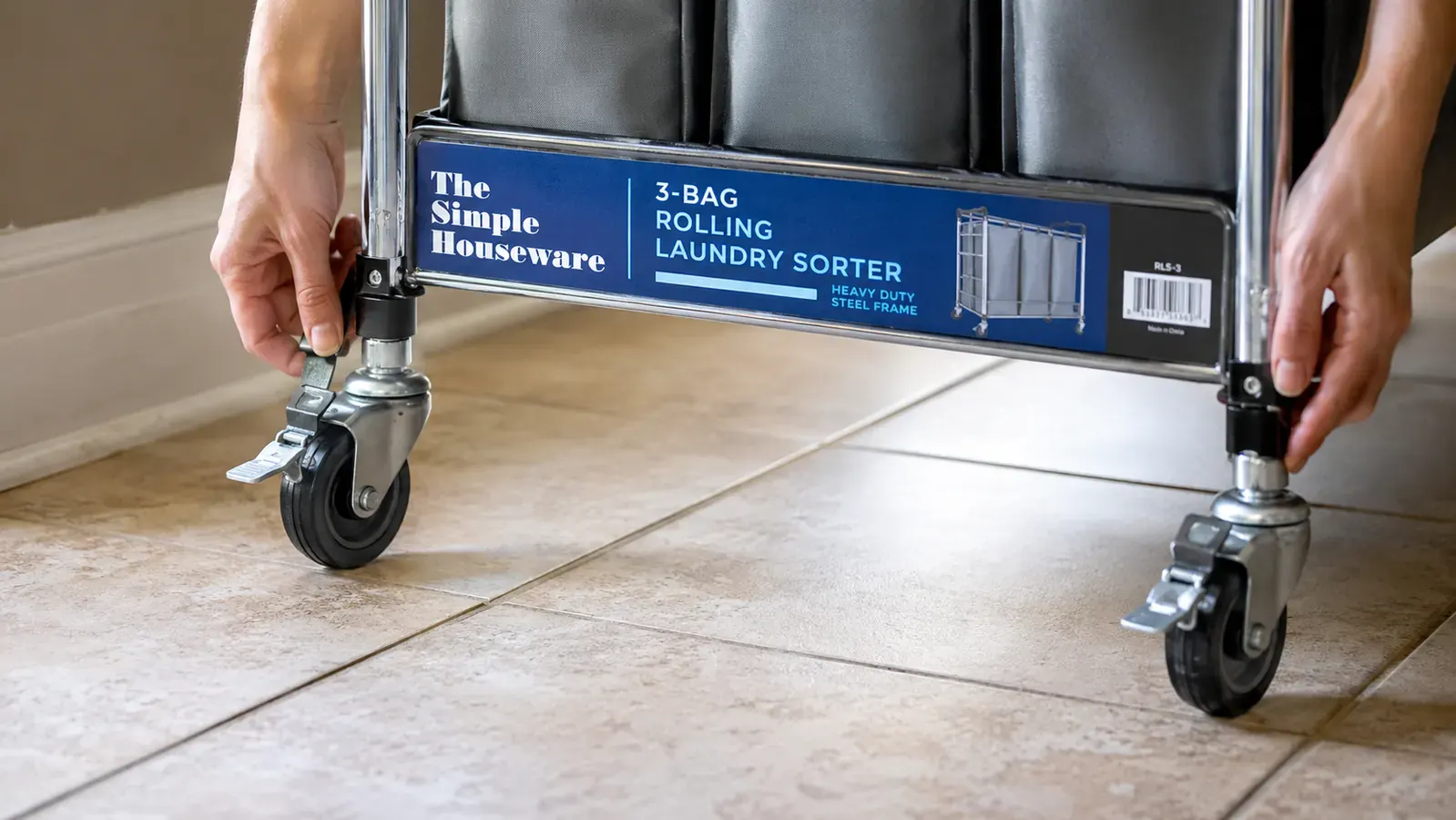
Four swivel casters, two of which lock. The locking mechanism is a small plastic tab you press with your foot, the same style used on most rolling kitchen islands and craft carts. After eighteen months, all four wheels roll smoothly and both locks engage cleanly. No wheels have stuck or seized. On tile, hardwood, and the thin rubber mat in front of my dryer, the cart moves without catching or tilting.
I do not use the locks regularly because the cart sits in a corner. But when I have the cart in the middle of the floor and need it to stay put while I sort, the locks hold. I tested this by leaning into the cart at a bad angle while sorting, something that would send an unlocked cart rolling. With both rear wheels locked, it did not budge.
The cart rolls badly on thick carpet. If your laundry room has a plush rug or carpet tiles, the wheels will catch and drag. This is not a criticism, it is just physics. Rolling casters on soft carpet require more force than most people want to apply to a laundry cart. For tile or hardwood or bare concrete, the rolling is genuinely effortless.
Size and Fit: Will It Work in Your Specific Laundry Room?
The assembled dimensions are approximately 26 inches wide, 15 inches deep, and 35 inches tall. That footprint is smaller than I expected when I opened the box. In a laundry room where every inch matters, this cart fits in spaces that a triple-basket arrangement would never fit in. The narrow depth means it can sit in front of a washer or dryer without blocking the door swing if placed at the right angle.
The height is worth noting for families with young children. At 35 inches the top of the bags sits high enough that a child under four or five years old would need to stretch to drop clothes in, which could be a benefit or a barrier depending on your goal. For a household with older kids or adults, the height is exactly right for dropping clothes in without bending.
Assembly takes about fifteen minutes and requires no tools beyond the wrench included in the box. The instructions are clear, with numbered steps and diagrams. My one suggestion is to assemble the frame completely before attaching the bags, not the other way around. A few people do it bag-first and then struggle to get the last frame joint tight. Frame first, bags last, done in fifteen minutes.
What I Liked
- Frame has shown no rust or wobble after 18 months of daily use in a humid laundry room
- Three labeled sections genuinely change sorting behavior, especially with teenagers in the house
- Cart rolls effortlessly on tile and hardwood, even when moderately loaded
- Both locking wheels hold under lateral pressure
- Bags are machine washable and dry quickly off the frame
- Footprint is smaller than a triple-basket arrangement and fits in tighter laundry rooms
- Replacement bags are sold separately so the frame does not become a throwaway item
Where It Falls Short
- Overfilling all three bags causes a noticeable forward lean, the weight limit is real
- Bags show wear at the rim ring after about 14 to 18 months of heavy use
- Wheels drag and catch on thick carpet or plush rugs
- The plastic locking tabs feel lightweight and could snap with aggressive foot pressure over time
- No lid or cover option, so loose lint and pet hair collect in open bags between washes
Alternatives I Considered Before and After Buying
Before buying this cart I looked at the Brighthouse laundry sorter, which sits in the same price range and has a similar 3-bag rolling design. The main difference I noticed is that the Brighthouse version uses slightly heavier gauge tubing on the frame. I went with Simple Houseware based on the review volume: 25,000 reviews tells me enough people have lived with this product long enough to describe real problems, and the complaints I saw were consistent with what I described above, overloading and bag wear, rather than anything structural. If you want a deeper comparison of these two carts, I wrote a full side-by-side in the Simple Houseware vs Brighthouse laundry sorter comparison.
I also looked at heavy-duty commercial laundry carts, the kind used in hotels and hospitals, at three to four times the price. For a home laundry room handling nine or ten loads a week, that is overkill. The Simple Houseware cart is built for household volume, not industrial volume. Knowing that going in sets the right expectations.
Who This Cart Is For
This cart works best for households of two to five people who do laundry two to four times a week. It is especially well suited for anyone who currently uses multiple separate baskets in different rooms, because consolidating into one rolling cart cuts the number of trips it takes to gather laundry before wash day. If you are managing a two-bedroom apartment or a three-bedroom house and your laundry room has tile or hardwood floors, this is a very practical upgrade at a price that does not require much deliberation.
It also works well in mudrooms and master bedroom closets if those spaces have hard floors and enough clearance. I know a client from my organizing work who keeps hers in a large master closet, sorted by who the laundry belongs to rather than by type. The cart adapts to whatever sorting logic works for your household.
Who Should Skip It
If your laundry area is carpeted and you cannot easily roll a cart, this product's main advantage disappears. A stationary triple-sorter on a carpeted floor would serve you better. Similarly, if your household generates laundry at a commercial pace, more than twelve or fifteen loads a week, the bags will wear faster than the standard timeline and the frame will be under constant stress. At that volume you want a commercial-grade cart, even if it costs significantly more.
Anyone who prefers a lidded hamper for odor containment will not love the open-top design. The three bags are open at the top, which is great for quick sorting but means odors from workout clothes or damp towels circulate into the laundry room rather than staying contained. A small tip: drop a dryer sheet into each bag when it is new and replace it monthly. It helps more than you might expect.
If you want a full step-by-step on building a laundry sorting routine around a rolling cart, I put one together in the how to sort laundry efficiently with a rolling cart guide. It covers labeling, daily drop habits, and how to batch your loads to cut wash day from a long afternoon down to something you barely notice.
Nine loads a week, one cart, no more basket archaeology across two floors.
After 18 months, this is still the cart I recommend to clients and use in my own home. At this price it has genuinely earned its keep. Check the current price on Amazon before it changes.
Amazon Check Today's Price on Amazon →